


The winning entry was submitted by Metropolis. PI ARENA came second. However, subsequent developments led the architects to decline the prize of 4 million rubles in order to preserve their intellectual property rights.
The competition procedure raised a number of concerns. The composition of the jury was never officially disclosed, making it impossible to assess its professional qualifications. The submissions were not anonymous: all projects were presented without identification codes. No public presentations or project defenses were held. According to an official email distributed by the competition operator to the jury members, several entries – including the proposal ultimately declared the winner – were submitted after the official deadline for accepting competition materials.
In early May, after the competition results had already been announced, PI ARENA received an additional agreement on the assignment of exclusive rights to the conceptual design. Under its terms, the authors would not even be allowed to publish their own concept without the purchaser’s consent. The agreement also contained the following provision: “From the moment the exclusive rights are transferred, the Purchaser shall be entitled, independently and without the Author’s consent, to make any modifications, additions, or alterations to the Work necessary for its implementation, without any further approval by the Author”. Some time later, the Purchaser also informally requested the project’s 3D models.
Given the high level of development of the architectural concept, as well as concerns regarding the competition procedure and what we consider unreasonable demands concerning the transfer of intellectual property rights and the provision of project materials, PI ARENA officially declined the prize and retained full copyright to the project.
In early May, after the competition results had already been announced, PI ARENA received an additional agreement on the assignment of exclusive rights to the conceptual design. Under its terms, the authors would not even be allowed to publish their own concept without the purchaser’s consent. The agreement also contained the following provision: “From the moment the exclusive rights are transferred, the Purchaser shall be entitled, independently and without the Author’s consent, to make any modifications, additions, or alterations to the Work necessary for its implementation, without any further approval by the Author”. Some time later, the Purchaser also informally requested the project’s 3D models.
Given the high level of development of the architectural concept, as well as concerns regarding the competition procedure and what we consider unreasonable demands concerning the transfer of intellectual property rights and the provision of project materials, PI ARENA officially declined the prize and retained full copyright to the project.
Football in a Historic City
The eight-hectare stadium site appears large enough to accommodate the proposed mixed-use program. Yet the design process is complicated by the irregular shape of the plot. Part of the frontage facing Truda (“Labor”) Square and Svobody (“Freedom”) Street is occupied by an office building, while the block also contains a fitness club, a commercial office center, and three sports schools. Development parameters are further constrained by the nearby television tower, the sanitary protection zone of the Aura shopping and entertainment center, and the approach path of Tunoshna Airport.
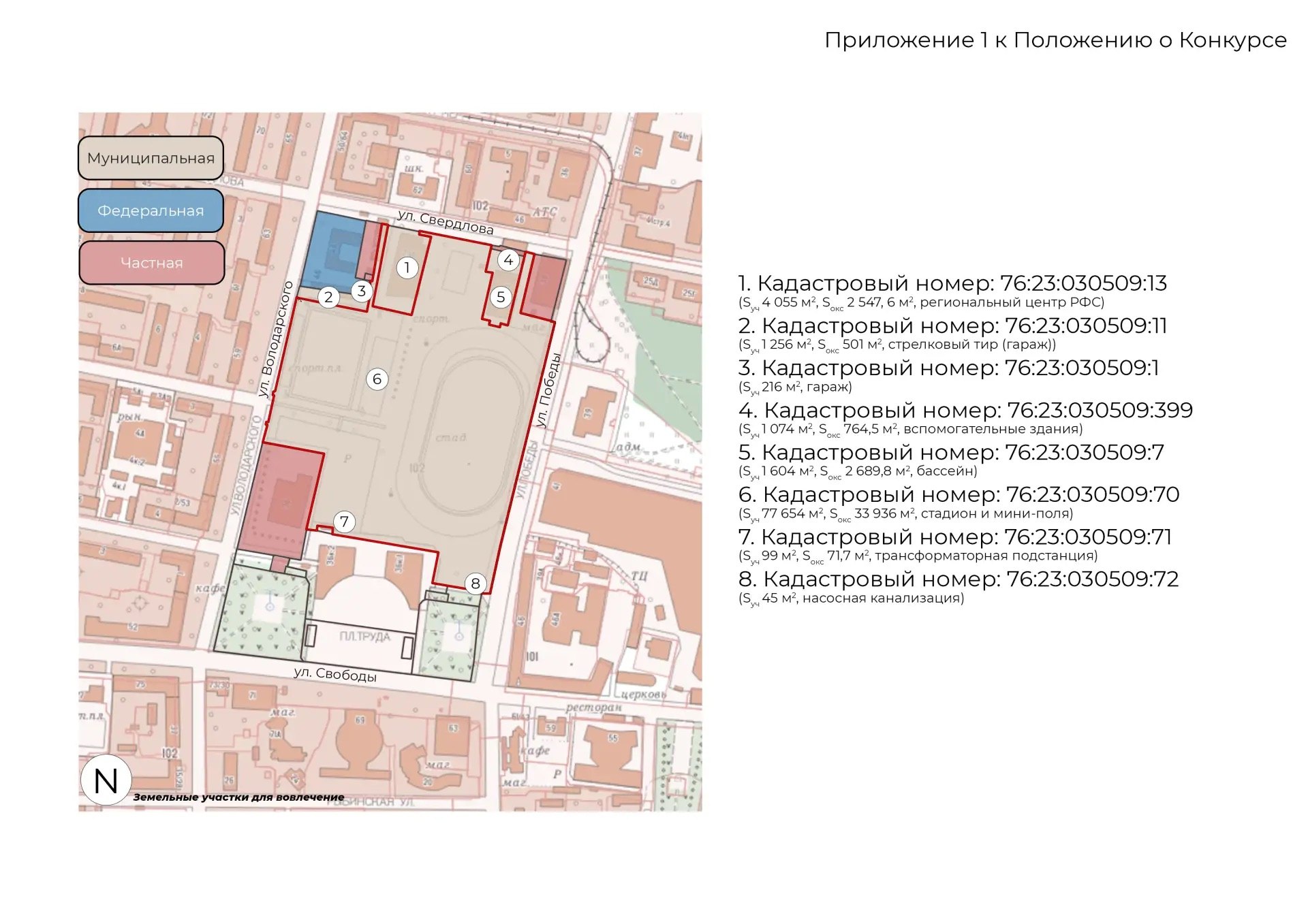

Location plan, the materials from the competition brief
Located in central Yaroslavl, the stadium is surrounded by a highly diverse urban fabric, ranging from seventeenth-century churches, military barracks, and the city’s first power station to a Soviet-era circus and a contemporary shopping mall. Football has been played on this site since the 1930s, and in the 1960s a large stadium was built for the local team, Shinnik. Despite numerous reconstructions, however, the arena never reached its moment of greatest prominence and was not selected as a venue for the 2018 FIFA World Cup. Since both the city authorities and investors consider reconstruction more expensive than new construction, the existing stadium is to be demolished entirely.

Shinnik Football Stadium
A Sporting Organism
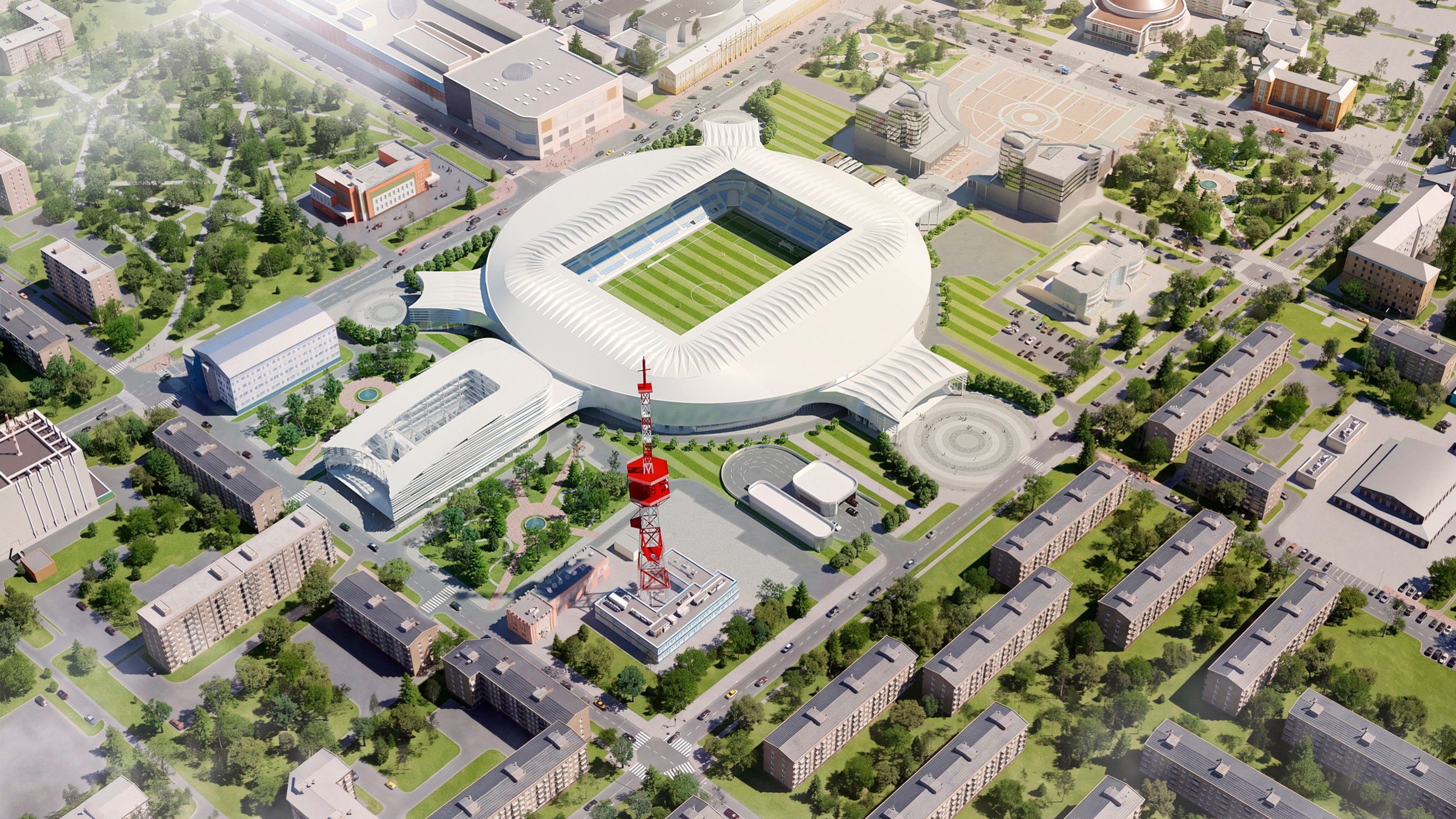
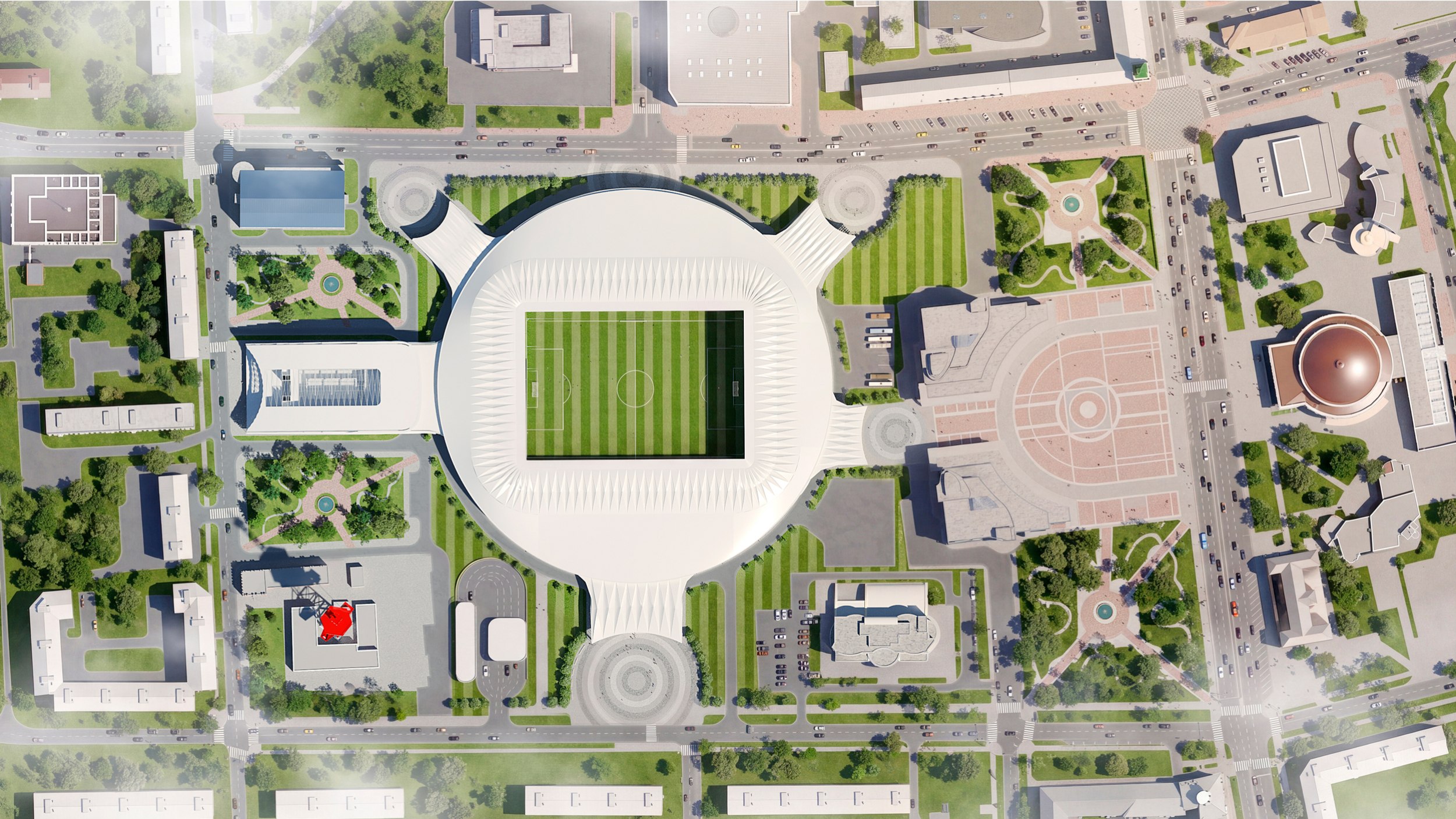
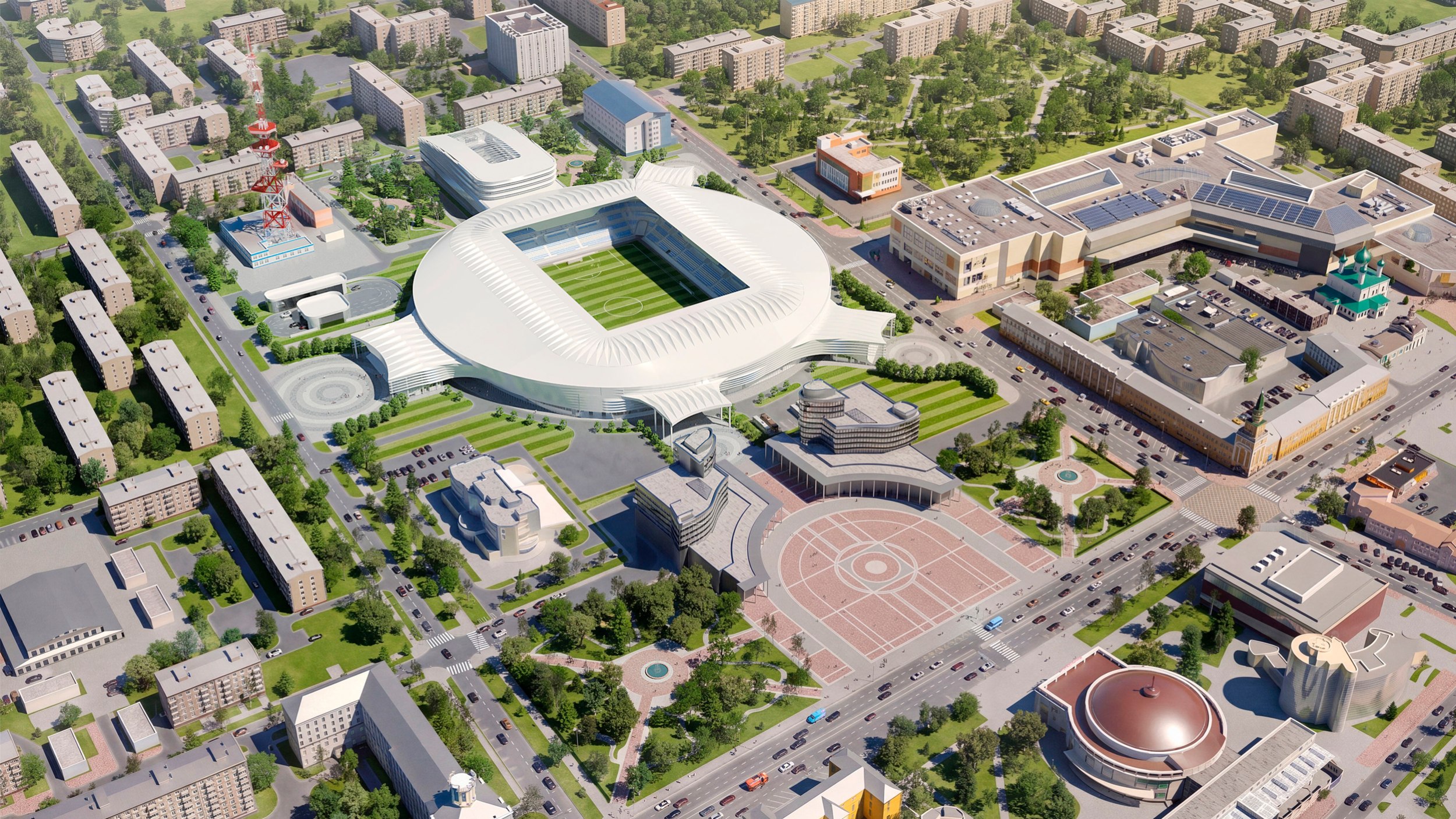
PI ARENA’s proposal brings together the sports, office, and hotel components into a single complex, with the football pitch serving as its center and heart. The result is a low-rise composition without vertical landmarks, complemented by a system of public squares and landscaped spaces that break the large site into smaller, more human-scaled urban fragments.

Shinnik Football Stadium
On the northern side, extending the axis of Truda Square, a hotel and sports-and-wellness complex with a swimming pool adjoin the stadium bowl. The buildings are connected by a bridge at the second and third-floor levels, accommodating the pool, restaurant, conference facilities, and administrative offices. The upper floors contain fifteen serviced apartments with a separate entrance and dedicated vertical circulation core. An atrium opens toward the street through a large glazed façade.

Shinnik Football Stadium
Copyright: © PI ARENA
The office center occupies the eastern sector of the stadium and rises four stories above ground. The upper floors enjoy views both of Pobedy Street and of the playing field. This part of the complex also incorporates a sports and entertainment center with bowling alleys, squash courts, and dedicated e-sports facilities.

Shinnik Football Stadium
Copyright: © PI ARENA
A 326-space underground parking garage frees the surface level for generous landscaping and public amenities.
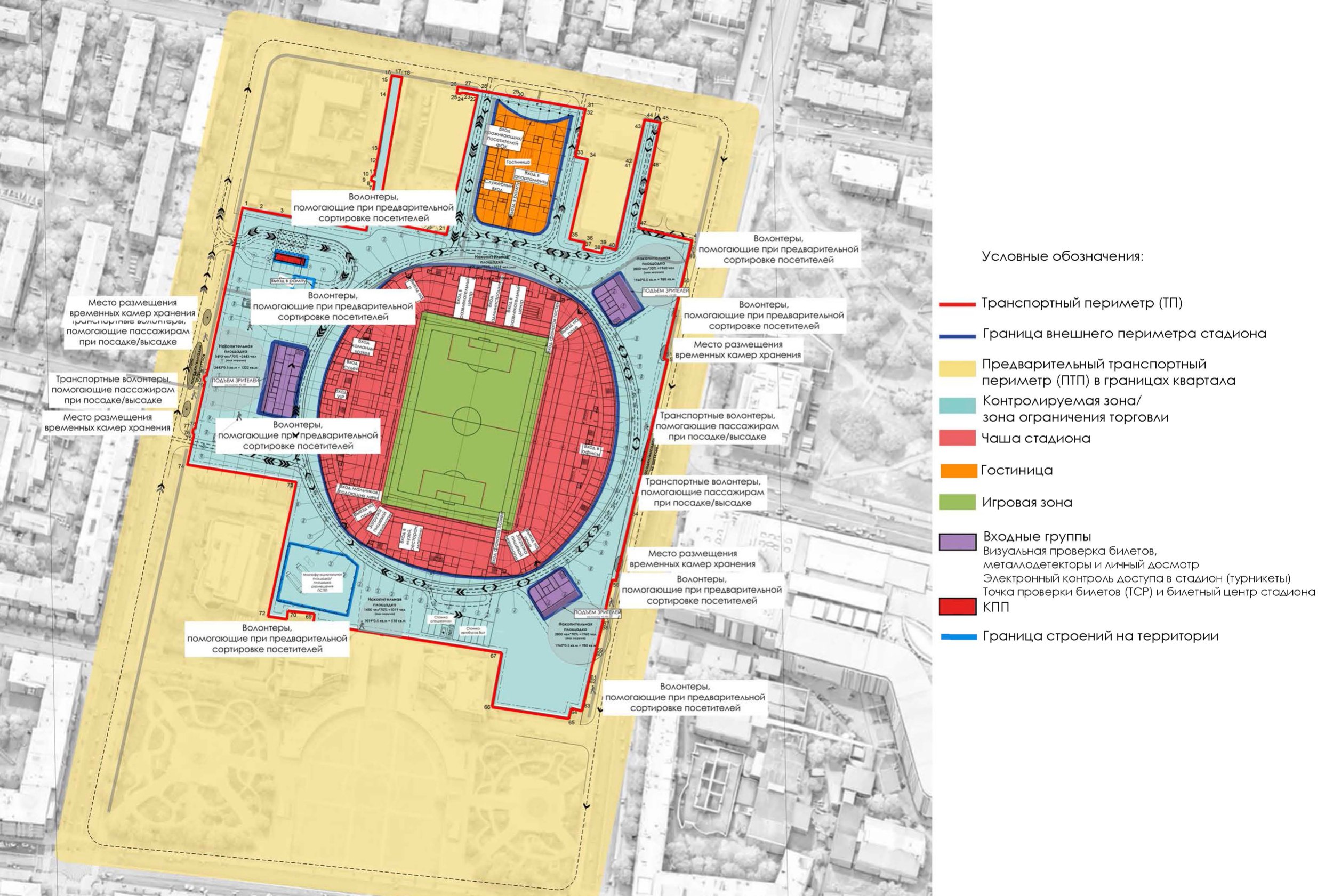
Spectators enter the stadium through three main entrances, each preceded by a forecourt. A fourth forecourt serves the office center entrance from Pobedy Street, while a fifth marks the entrance to the museum, retail, and restaurant block facing Truda Square. These landscaped public spaces are designed both for everyday recreation and for citywide events such as holiday celebrations, concerts, fairs, and public skating. Seating areas are integrated beneath the entrance canopies. The paving pattern, lighting fixtures, benches, waste bins, and wayfinding elements all reinforce the architectural language of the stadium and hotel.

Shinnik Football Stadium
Copyright: © PI ARENA

Shinnik Football Stadium
Copyright: © PI ARENA
The White Ribbon
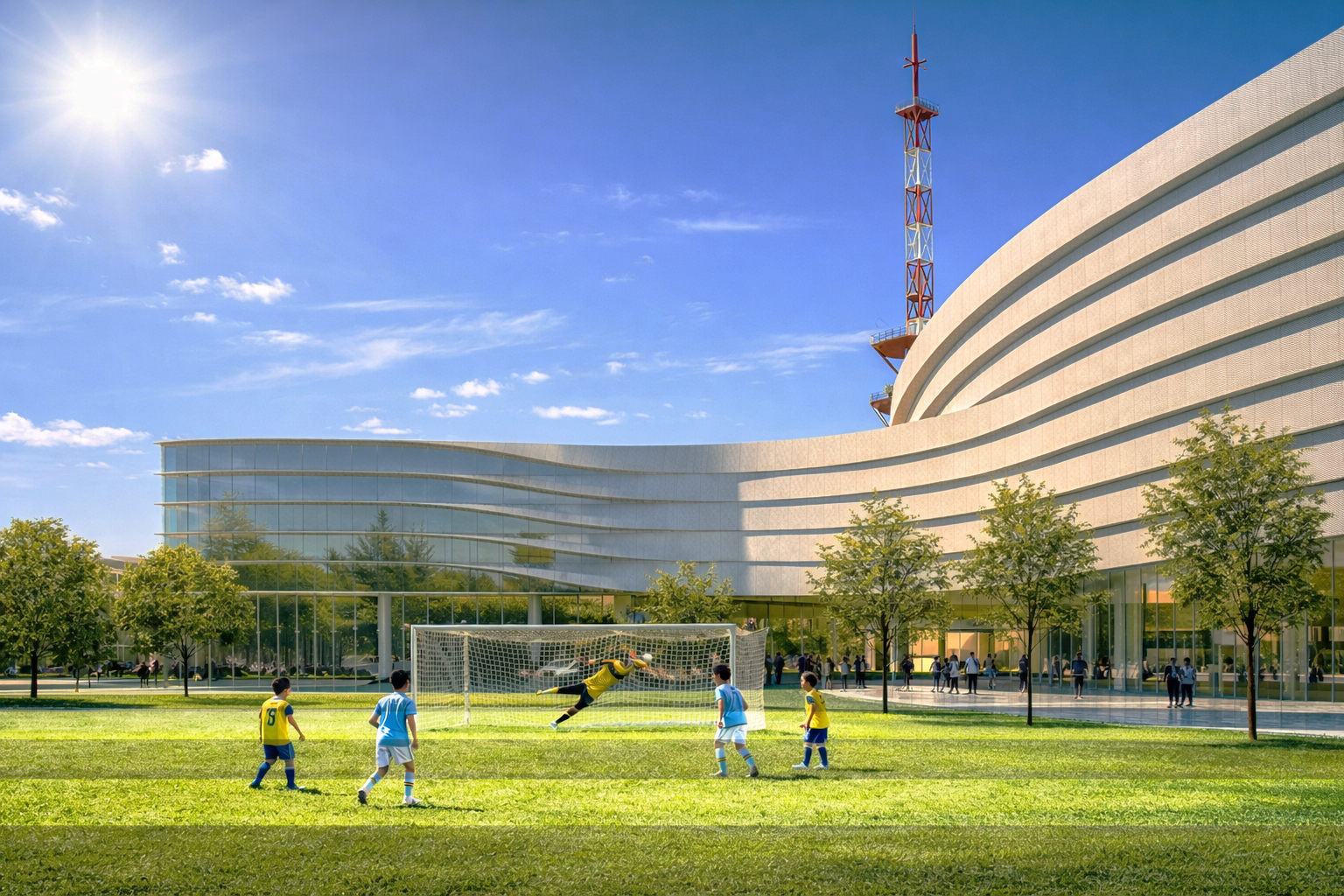
The element that ties the various parts of the complex into a unified whole is a system of ribbon-like bands wrapping around the façades. According to the architects, the “flowing, directional line conveys speed, trajectory, acceleration, and continuity of movement – qualities that are essential to sport”, while also “creating the impression that the building is caught in a permanent impulse, as though the architecture captures the instant of a sprint or a wave of collective spectator energy”. The ribbons express both the dynamism and the unifying nature of the game, but they also allude to the history of the arena’s owners: as the name Shinnik suggests, the football club was originally founded by the Yaroslavl Tire Factory (“Shina” meaning “tire” in Russian). From certain angles, the stadium indeed resembles a giant white tire.

Shinnik Football Stadium
Copyright: © PI ARENA
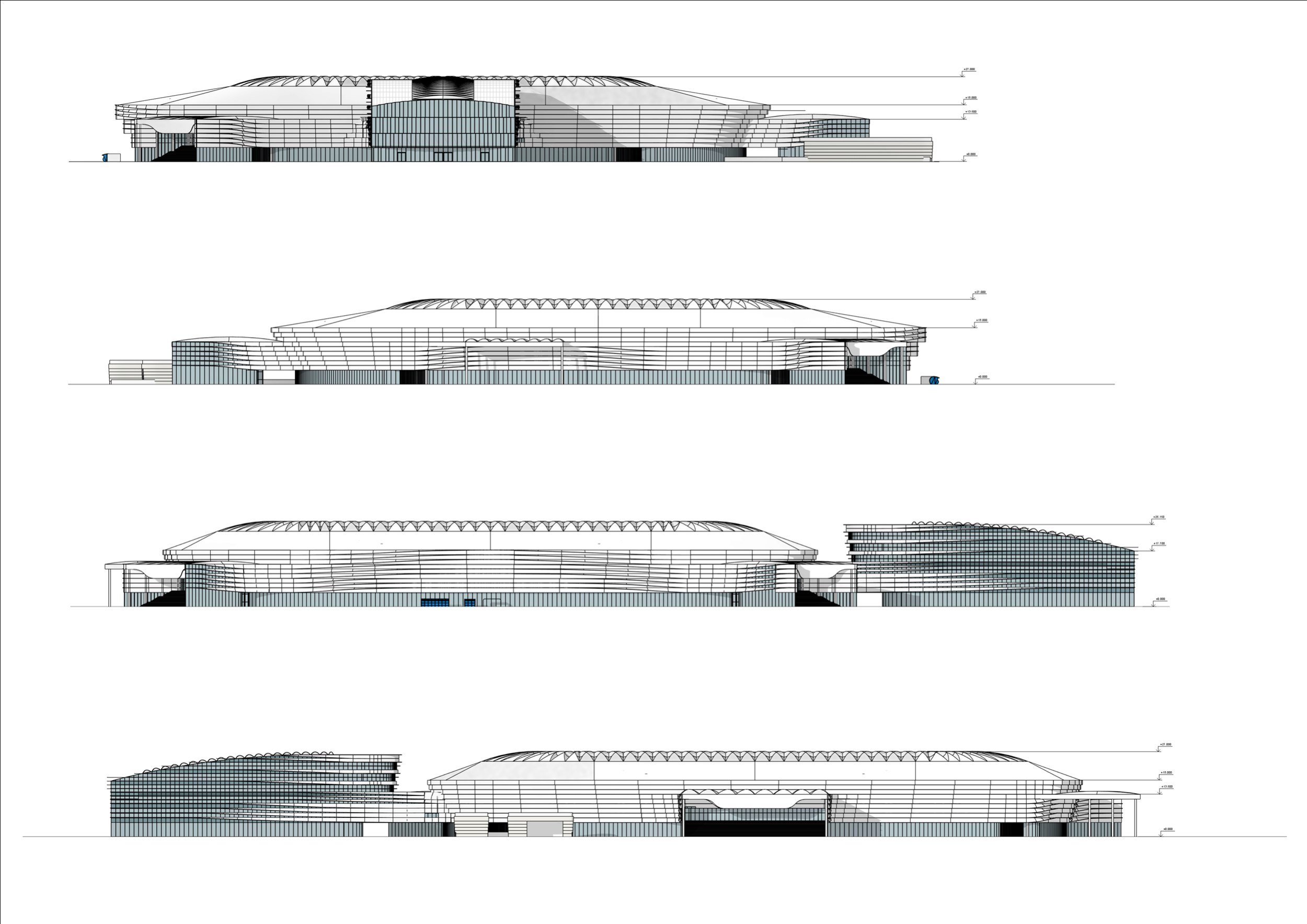
The roof profile, which slopes downward toward the façade, is a response to height restrictions: 18 meters along the perimeter of the block and 24-28 meters within the interior of the site.
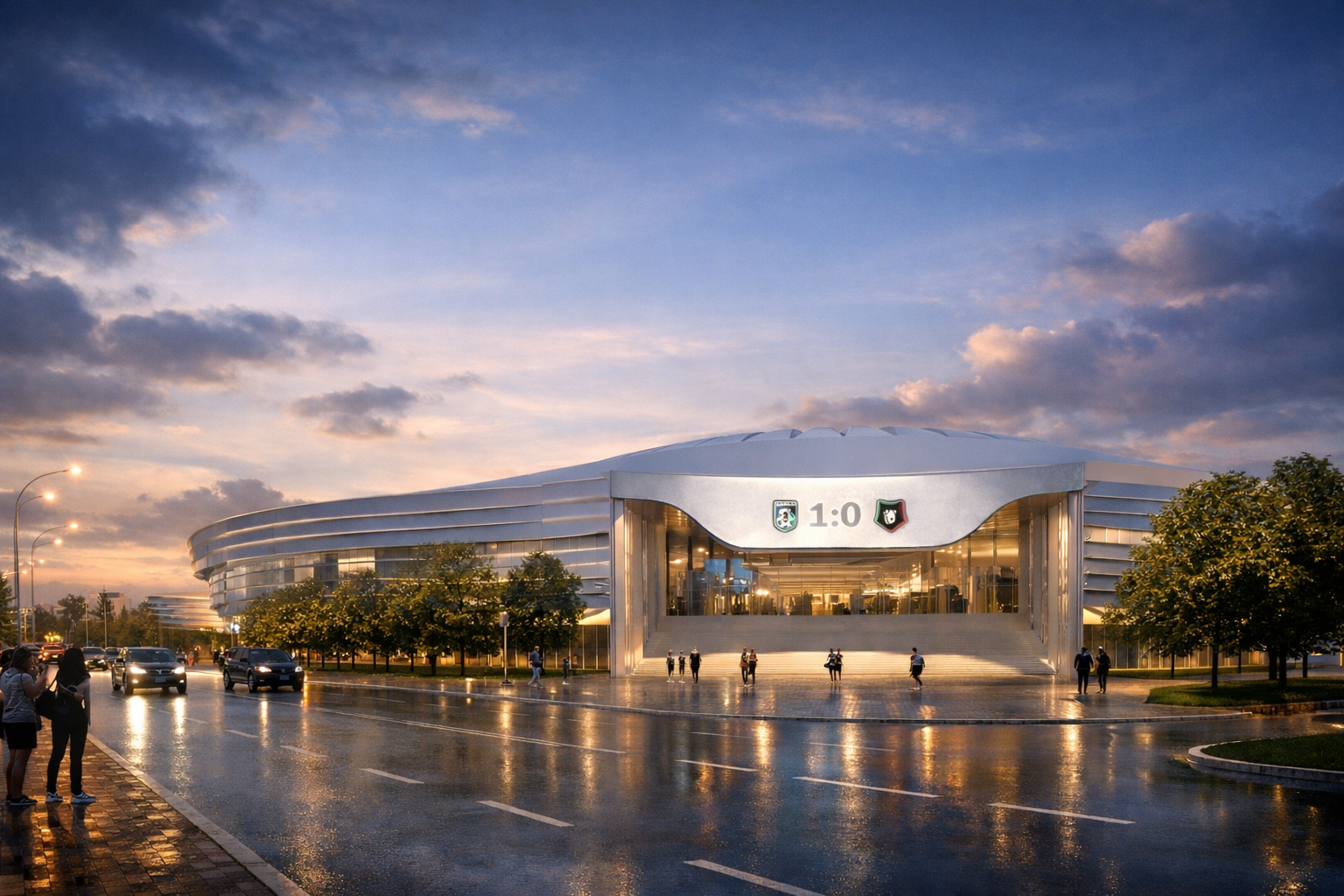

Shinnik Football Stadium
Copyright: © PI ARENA
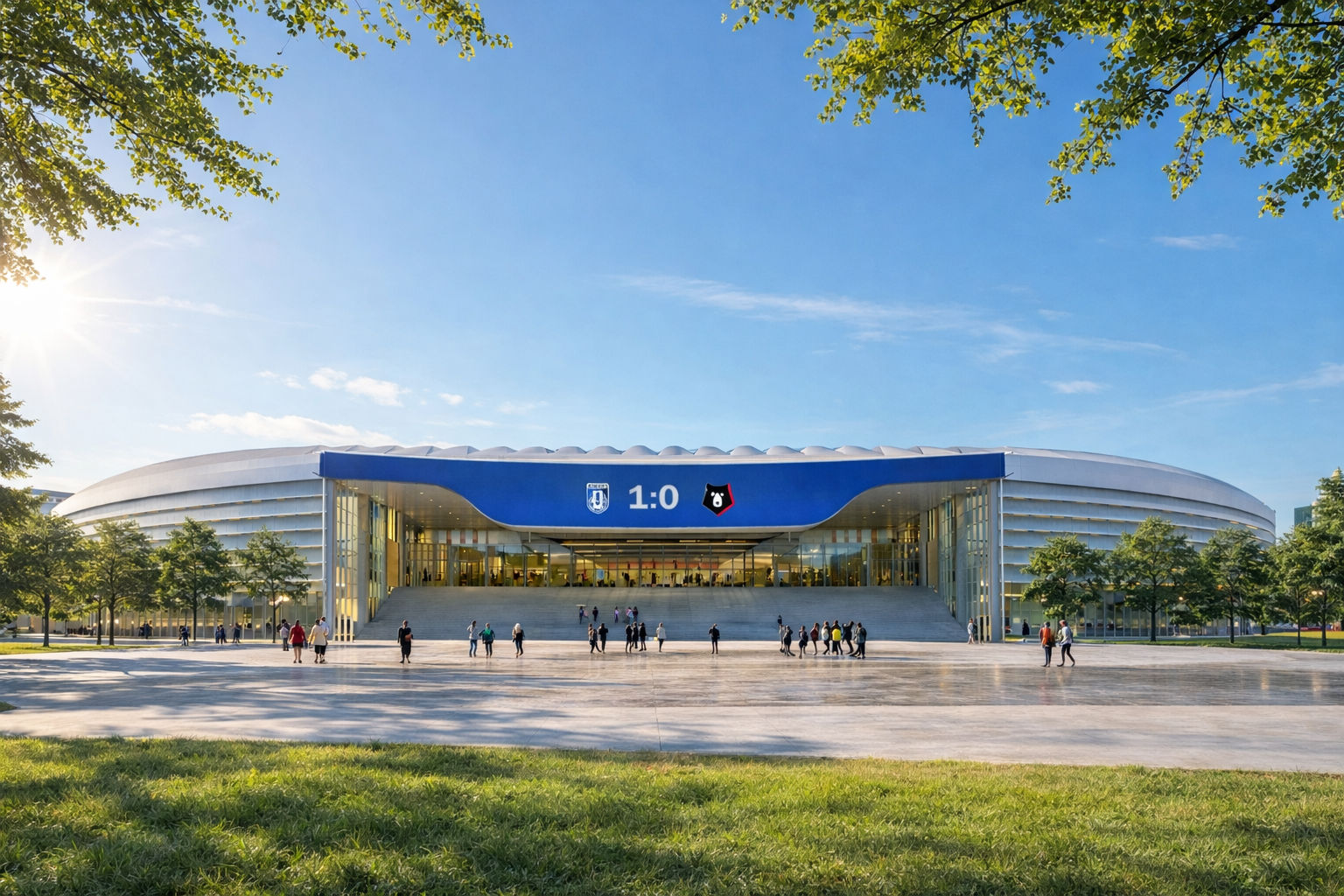
Monumental entrance portals, sheltered from wind and rain, prepare visitors for the spectacle while offering glimpses of the arena’s interior life through large glazed walls. The main entrances are located at level +5.100, while two additional ground-level entrances, positioned in the northern and southern parts of the building, are provided for active supporter groups. From the entrance halls, visitors proceed into the concourse, which contains restrooms, concession stands, and kiosks.
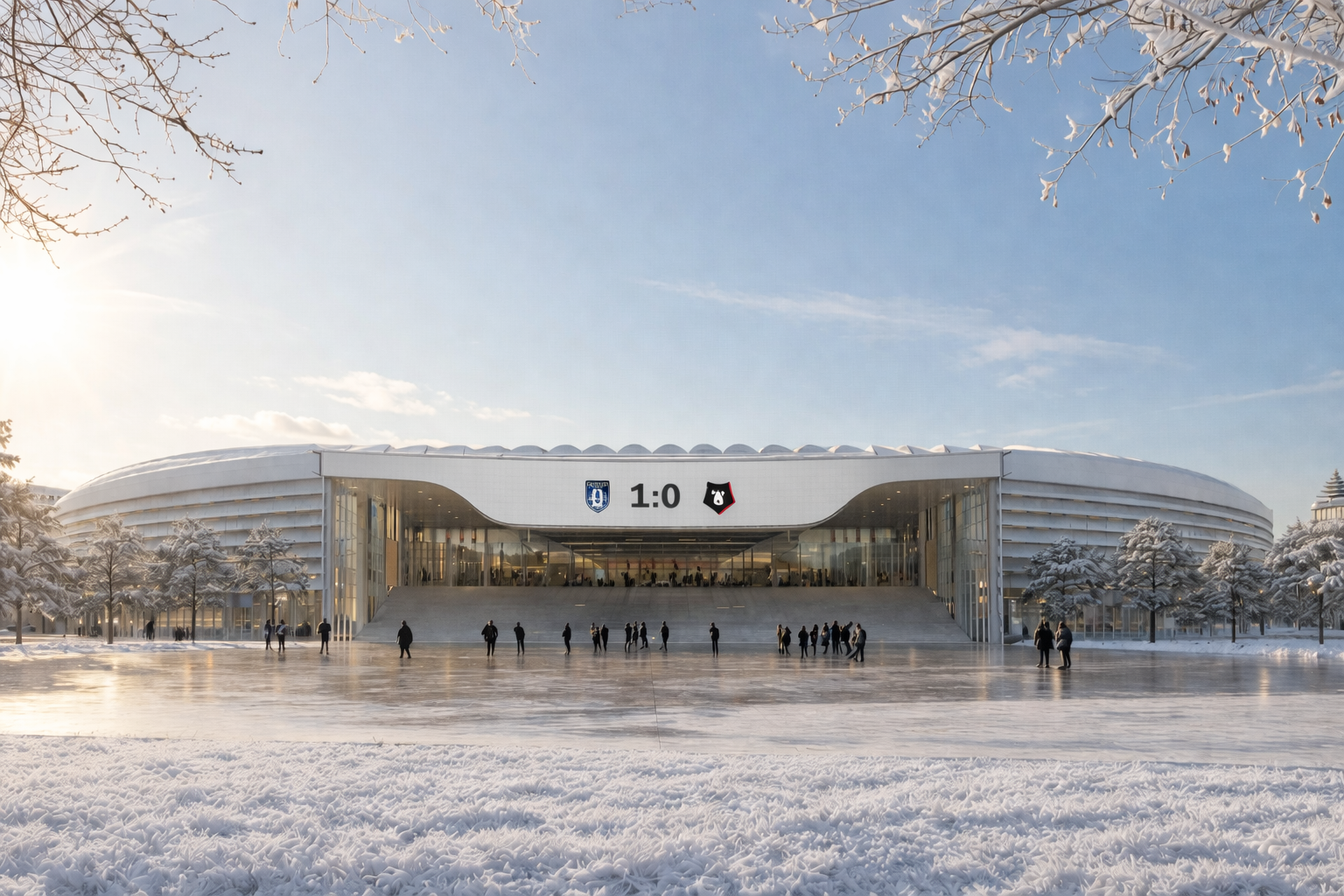

Shinnik Football Stadium
Copyright: © PI ARENA
From the concourse, spectators access the covered stands through a series of canopied stalls. Each row rises 100 millimeters above the one below, ensuring unobstructed views of the pitch from every seat. A large media screen further enhances the match-day experience.
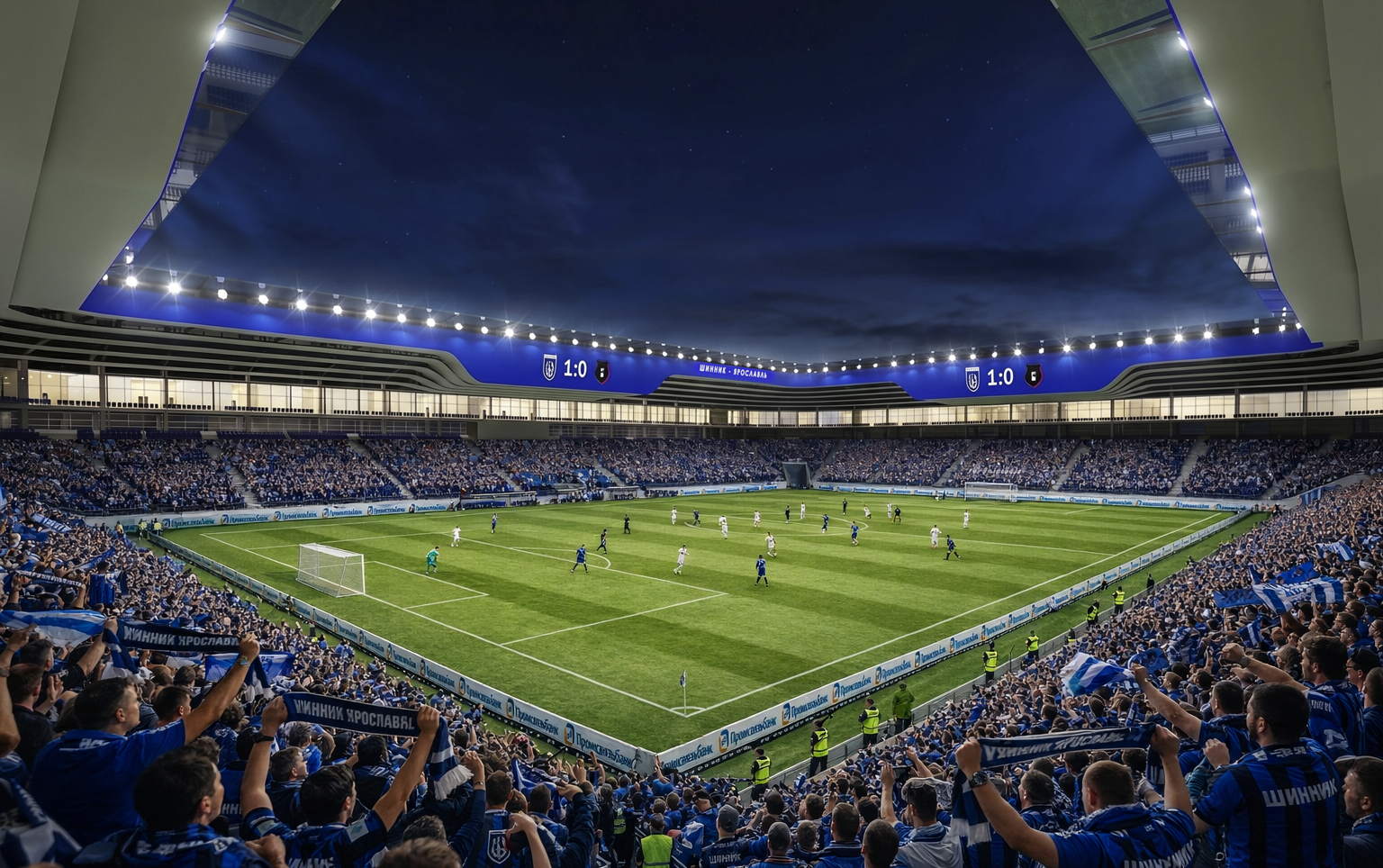

Shinnik Football Stadium
Copyright: © PI ARENA
The stadium comprises four above-ground levels. In addition to facilities for athletes and competition operations, it accommodates offices, a sports hall of fame museum, retail spaces, a restaurant, and a sports and entertainment center.
-
 1 / 5Shinnik Football StadiumCopyright: © PI ARENA
-
 2 / 5Shinnik Football Stadium. Ground floor plan, elevation 0.000Copyright: © PI ARENA
-
 3 / 5Shinnik Football Stadium. Second-floor plan, elevation +5.100
-
 4 / 5Shinnik Football Stadium. Third-floor plan, elevation +9.600
-
 5 / 5Shinnik Football Stadium. Fourth-floor plan, elevation +13.500


The competition organizers did not officially publish the winning proposal. A presumed version of the Metropolis concept can be viewed here.


